
A well-organised clinical environment can transform the way healthcare teams work. When storage is tidy, clearly labelled, and built around the real needs of staff, everyday tasks become easier, faster, and far less stressful. From medicine rooms to treatment areas, thoughtful design has a direct impact on safety, productivity, and overall patient experience.
While every healthcare setting is different, the goal is always the same:
Essential items need to be easy to find, easy to manage, and easy to restock.
Modern fitted furniture and modular systems—such as Systeméd cabinets, open shelving, and colour-coded storage—make this not only achievable but sustainable over time.
The Power of Good Organisation
An efficient space isn’t just about tidiness. It’s about creating a workflow that actively supports clinical teams. Clear labelling, structured shelves, and intuitive layouts reduce the time spent searching for equipment or checking expiry dates, allowing more time to be spent on direct patient care.
Why it matters:
- Medicines and consumables stay in rotation more easily.
- Stock counts become quicker and more accurate.
- Items are less likely to expire unnoticed, reducing unnecessary waste.
- Staff feel more confident working in spaces that “make sense.”
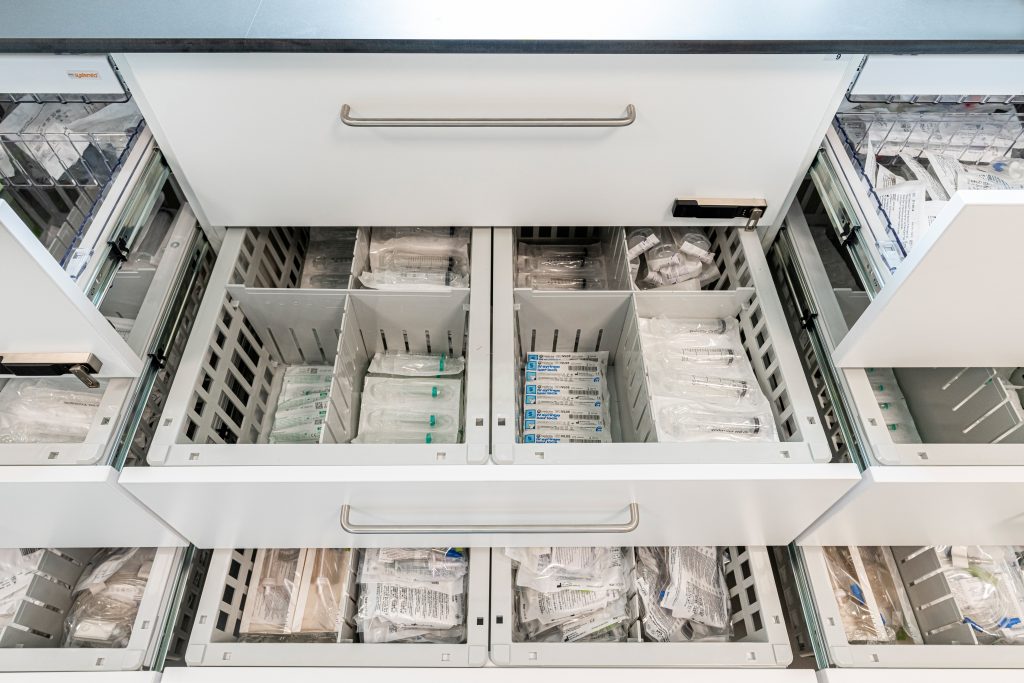
Smarter Storage
Purpose-designed fitted furniture helps bring order and consistency to clinical rooms. Rather than relying on mismatched cupboards or improvised shelving, fitted units create designated areas for specific tasks and supplies.
Examples of efficiency-boosting features:
- Integrated drawers for small consumables
Ideal for syringes, swabs, wound care items—keeps items clearly separated and easy to replenish.
- Tall cabinets designed for large items or bulk stock
Perfect for IV fluids, dressing packs, or boxed supplies.
- Worktops with adjacent storage
Makes preparation tasks smoother and keeps essential items within arm’s reach.
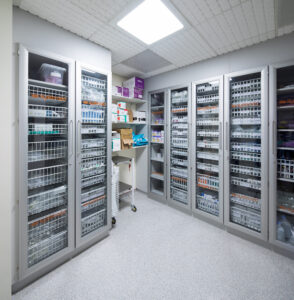
- Glass-fronted cabinet doors for instant visibility
Clear doors make it easy to see exactly what’s inside without opening multiple cupboards. This reduces searching time, supports faster stock checks and helps staff quickly identify when items need replenishing.
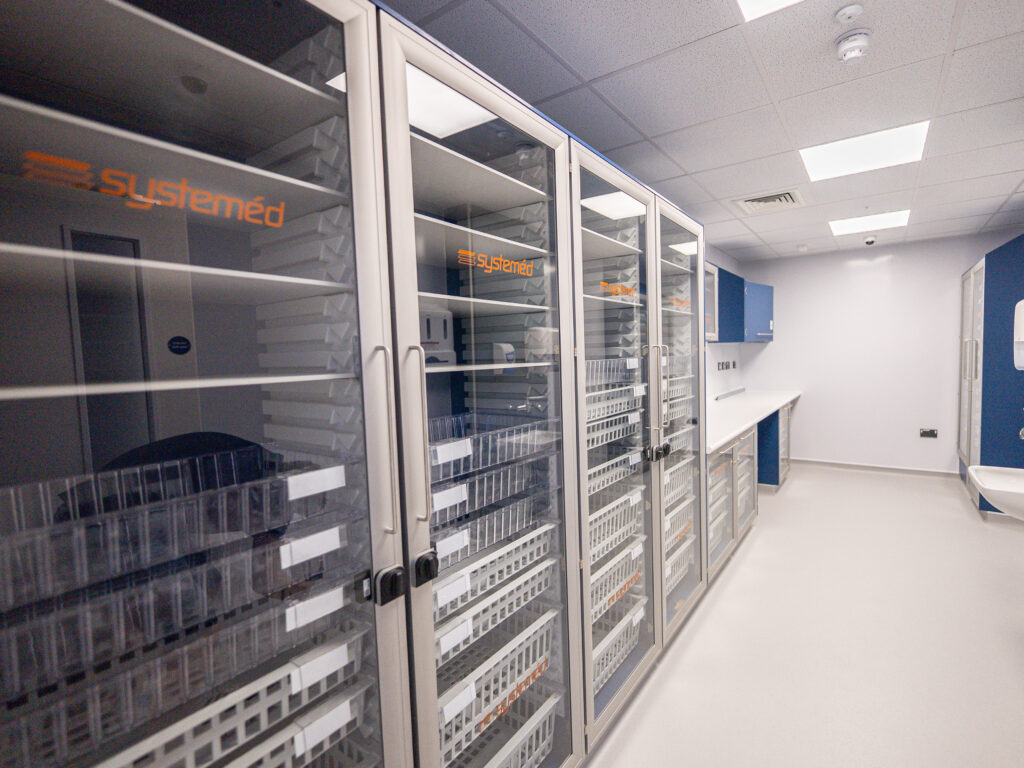
Modular Systems Like Systeméd Cabinets
Systeméd cabinets are a good example of how modular design can elevate clinical organisation. The flexibility means they can be reconfigured as needs change, supporting future-proofing and long-term value.
Benefits of Systeméd -style modular storage:
- Interchangeable trays and shelves
Quickly adapt layouts for medicines, medical devices, or consumables.
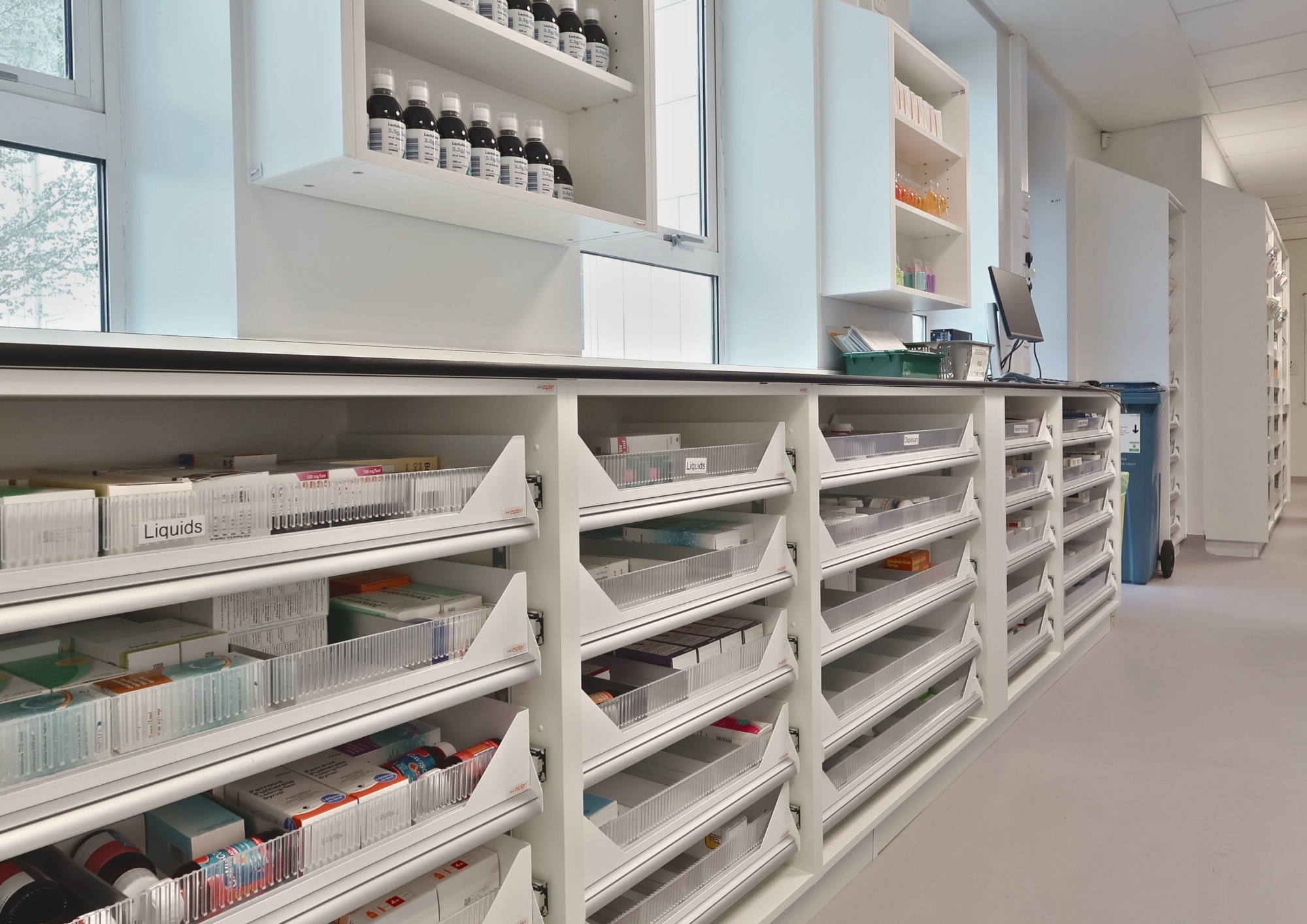
- Clear tray fronts and dividers
Make it easy to identify contents instantly, even from a distance.
- Colour-coding options
Helps differentiate between categories such as PPE, pharmaceuticals, and sterile supplies.
- Standardisation across multiple rooms
Staff instantly know where to look, even when moving between departments.
- Supports lean working principles
Reduces movement, searching, and time wasted on stock checks.
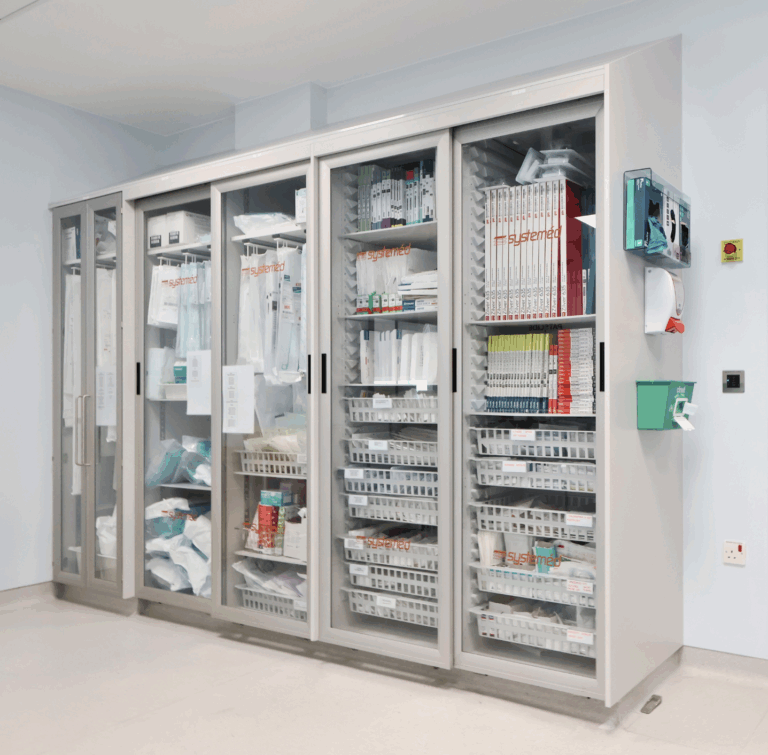
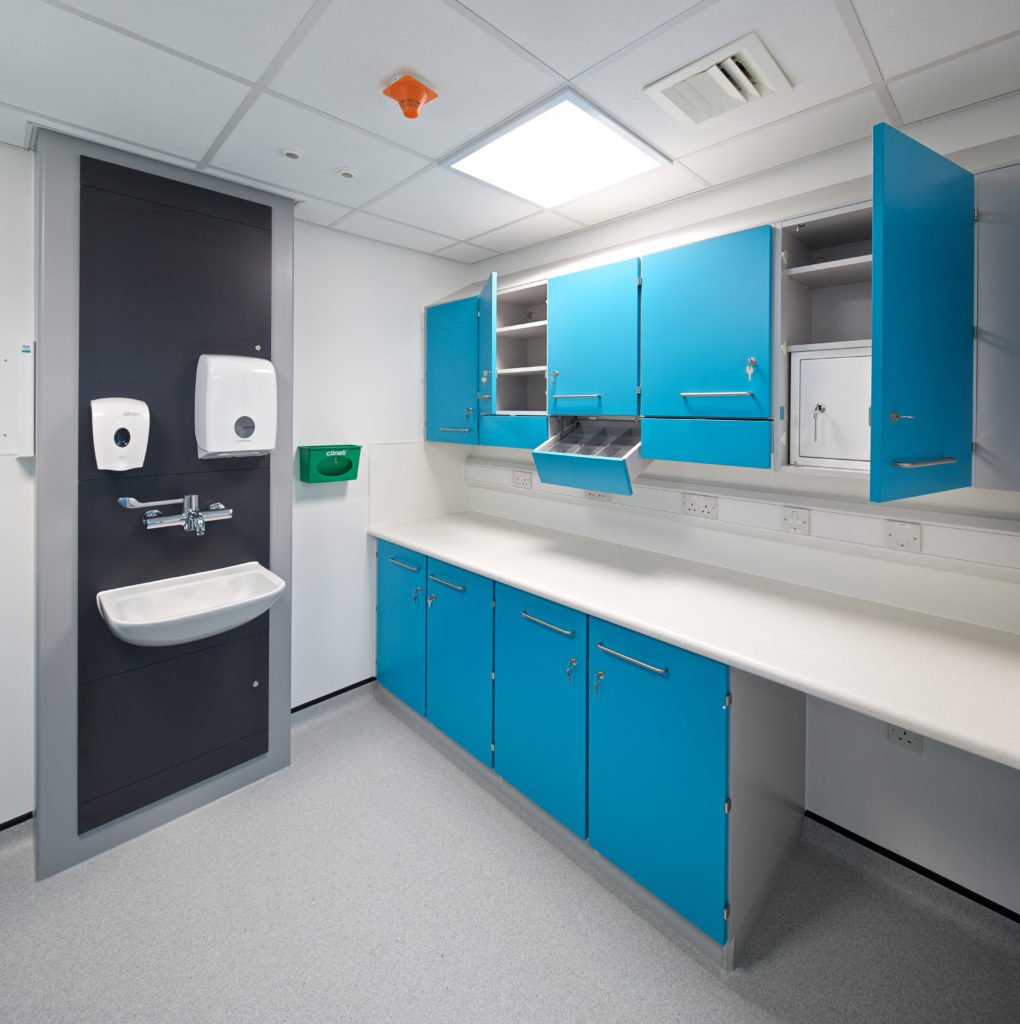
Colour Coding & Standardisation: Small Changes, Big Impact
Colour coding and standardised layouts create visual cues that staff quickly learn and rely on. This simple approach reduces cognitive load and prevents “storage confusion”—especially in busy settings.
Practical Examples:
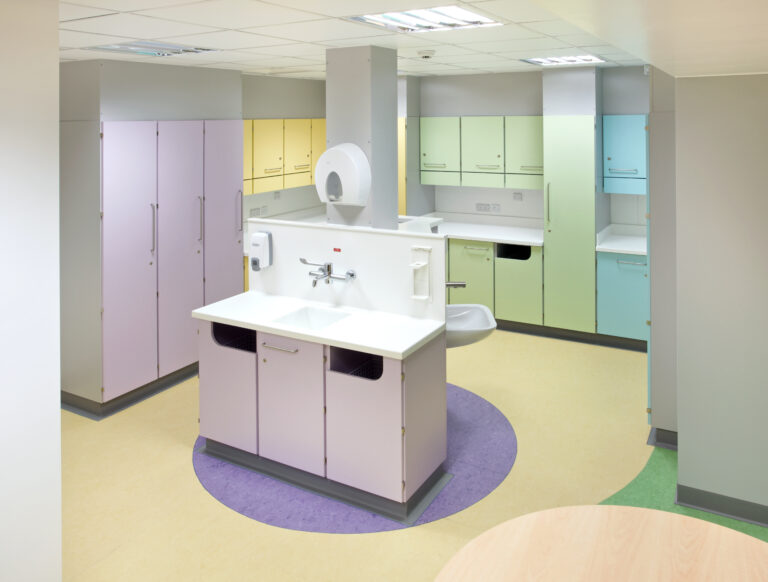
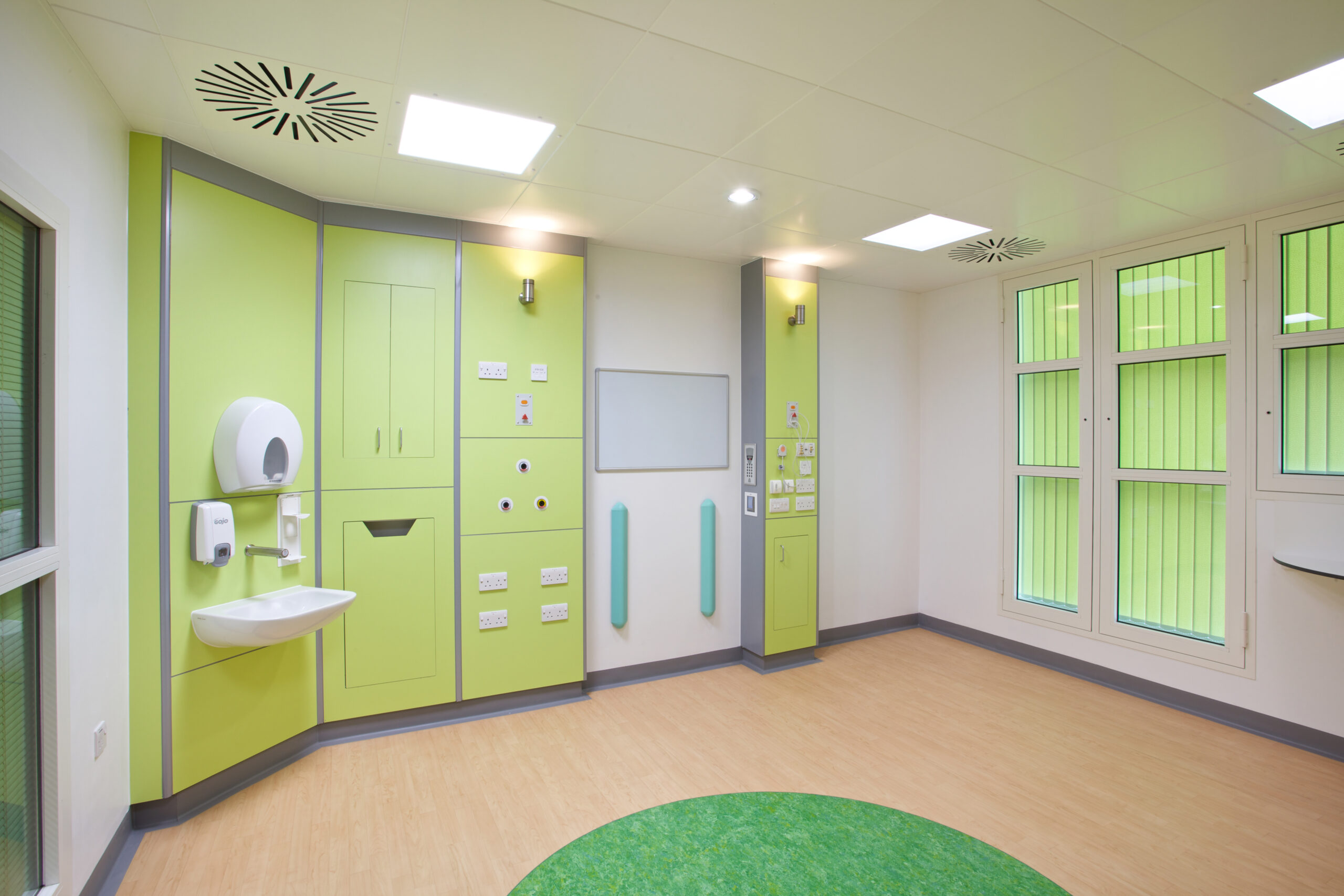
> (Photos above): To improve efficiency in this Hospitals’ Haematology unit, colour-coded zones were introduced in the drugs preparation area, each matched to the corresponding patient bedroom. For example, all medications for patients in the Green rooms were stored together in the Green cabinets. This intuitive setup minimised staff criss-crossing the space to gather supplies, boosted productivity, and supported a safer, more organised environment for patient care.
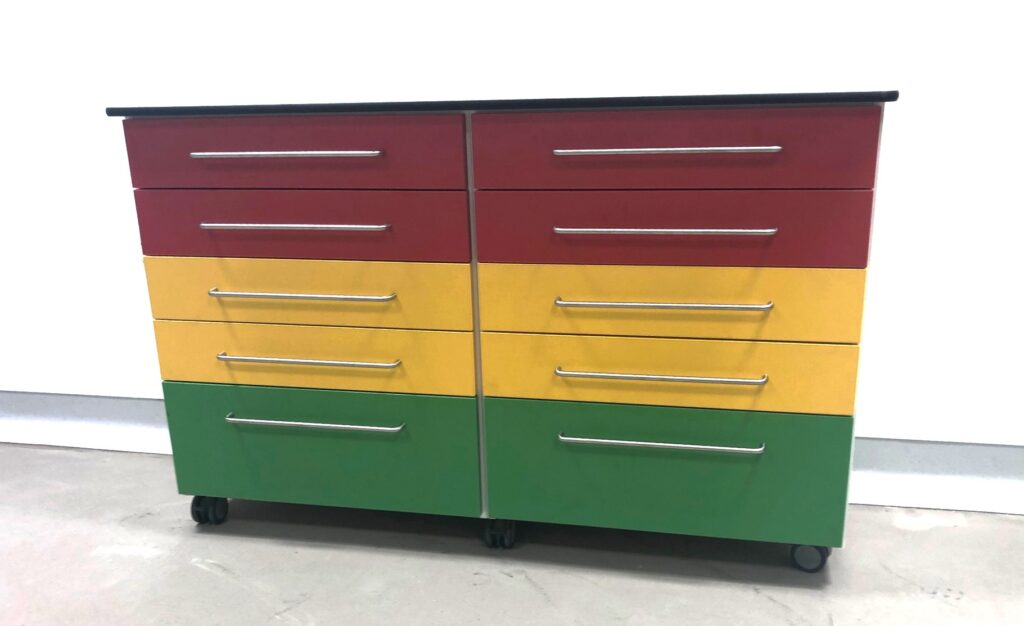
Another option chosen at this hospital A&E Resusc unit below was to create colour coded drawers where the different drawer colours represented different stock items.
Standardisation
- Standardised cabinet layouts and stock positions, shelf heights and tray layouts across wards
Improves familiarity and reduces searching time for floating or agency staff. - Consistent labelling formats
helps ensure every item and location is clearly identified.
Something as small as using the same tray layout in every treatment room can save hours over the course of a week.
Key Advantages of a Well-Designed Clinical Environment
- Organised stock reduces waste and makes expiry management easier.
- Efficient layouts release more nursing time for direct patient care.
- Fitted and modular systems adapt to changing procedures, equipment, or room functions.
- Colour coding and standardisation simplify daily tasks and support safer working.
- Clear labelling improves accuracy and confidence during busy shifts.
A More Efficient Future Starts with Thoughtful Design
Creating an efficient clinical environment doesn’t always require a full refurbishment. Sometimes, small improvements—introducing modular storage, upgrading labelling, reorganising fitted furniture—can have an immediate and positive impact.
With the right combination of layout, labelling, and storage solutions, clinical teams can work with greater ease, accuracy, and confidence, ultimately improving the quality of care delivered to patients.