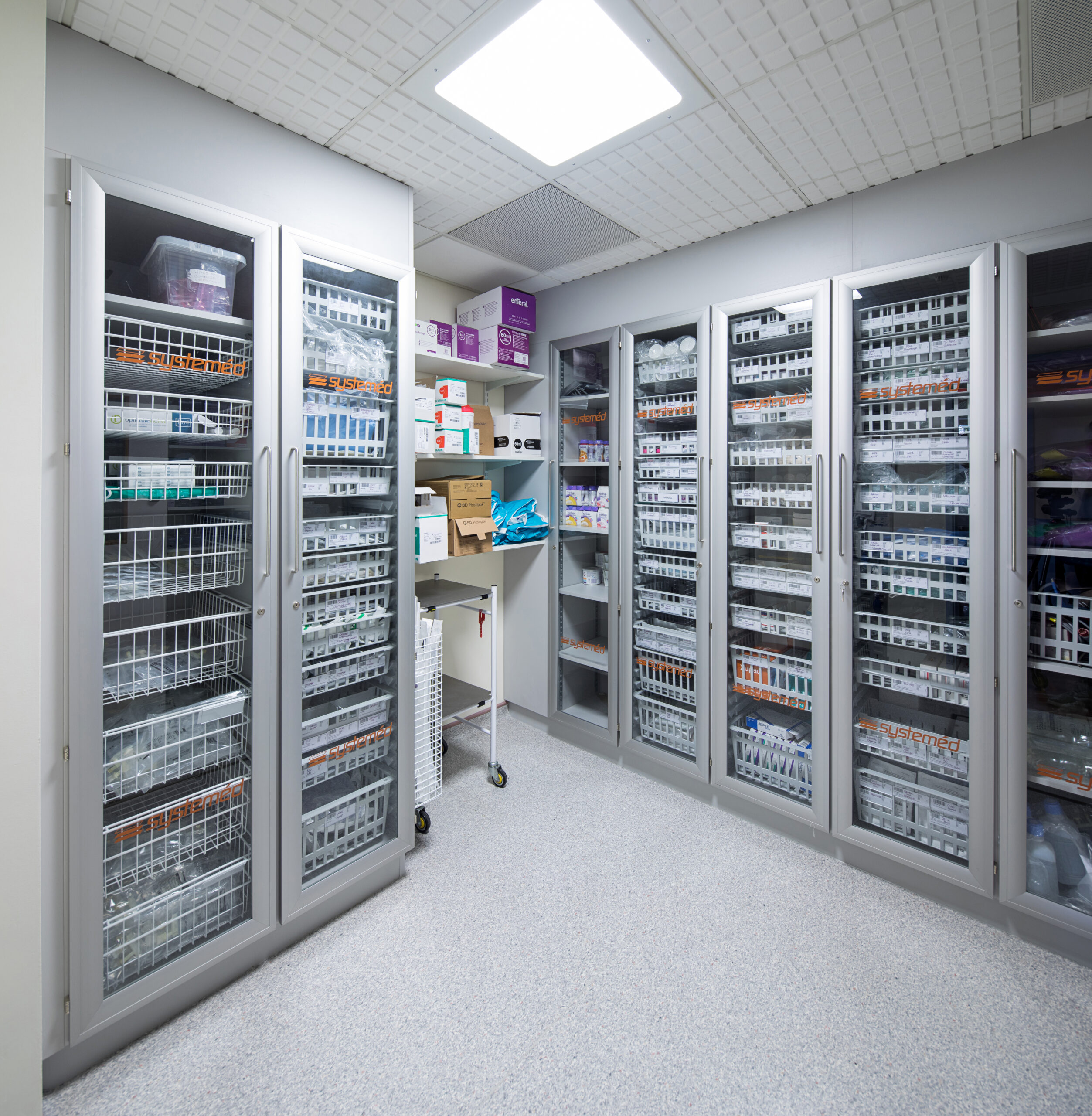
‘There’s always someone who says, ‘why can’t you buy the desks from Argos? We’ve always hung ourselves out on the basis of a quality product is always better value for money – hence sticking with you and all that your team do. Your products, your install and your aftercare are exemplary… and its apparent to others too.’
This recent feedback from one of our customers made us pause for a moment. At first glance, it’s a reasonable question. Specialist clinical furniture can look similar to the cabinetry you might see in homes or kitchens — so why not just buy domestic furniture?
The answer is simple: healthcare environments are not “everyday.” They operate under unique pressures, strict hygiene requirements, and constant workflow demands. And that’s exactly why storage systems that have been developed, refined, and tested specifically for clinical use outperform standard domestic furniture in every meaningful way.
Below, we explore why purpose-built clinical furniture consistently delivers greater value — long before cost even enters the discussion.
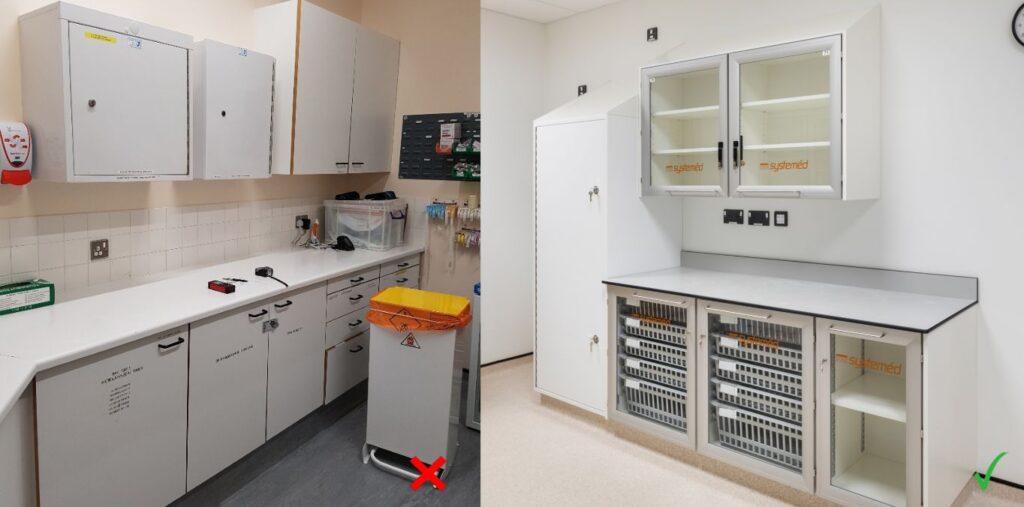
Built for Constant, Demanding Use
Clinical spaces are under relentless pressure. Cupboards and drawers may be opened, closed, cleaned, and re-stocked dozens of times per day. Domestic furniture is designed for light, occasional use — and often for a particular price point. Bespoke clinical storage, on the other hand, is engineered to withstand frequent handling and heavy workloads.
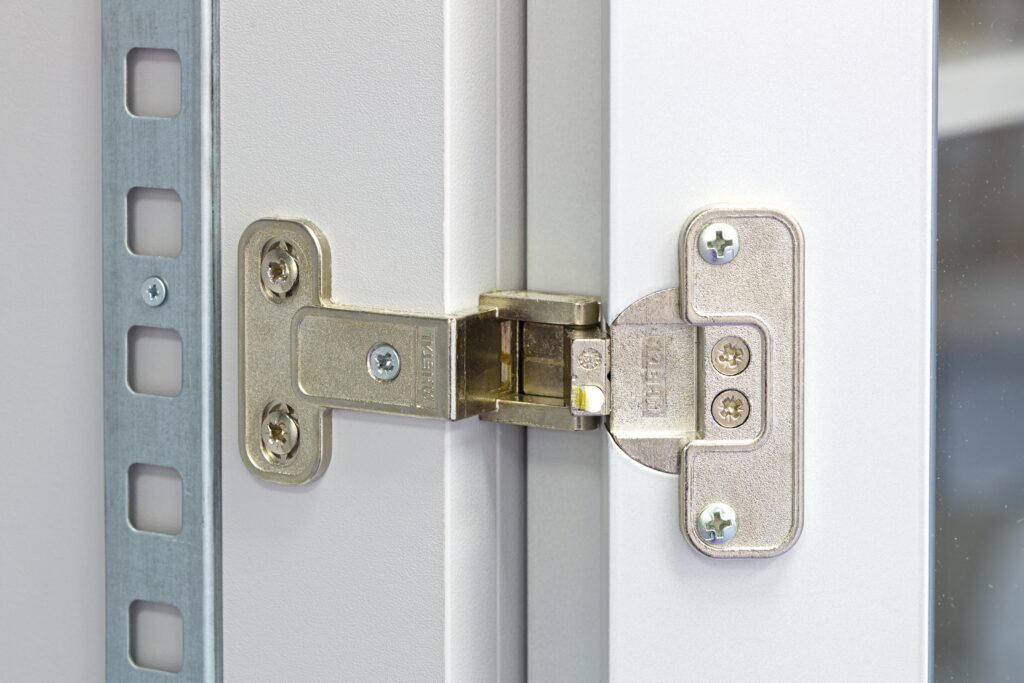
Reinforced joints, strengthened fixings, and robust materials ensure durability. For example, the hinges used in Systeméd fitted furniture carry a FIRA (Furniture Industry Research Association) H rating — the highest-duty classification designed for years of continuous, intensive use. Every component, from the surface finish to the fixtures, is selected to deliver reliability in busy, high-pressure clinical settings.
Modular, Flexible, and Ready to Adapt
Healthcare needs never stay still. New supplies arrive, workflows evolve, and room layouts change. A static domestic cabinet with fixed shelves can quickly become unsuitable.
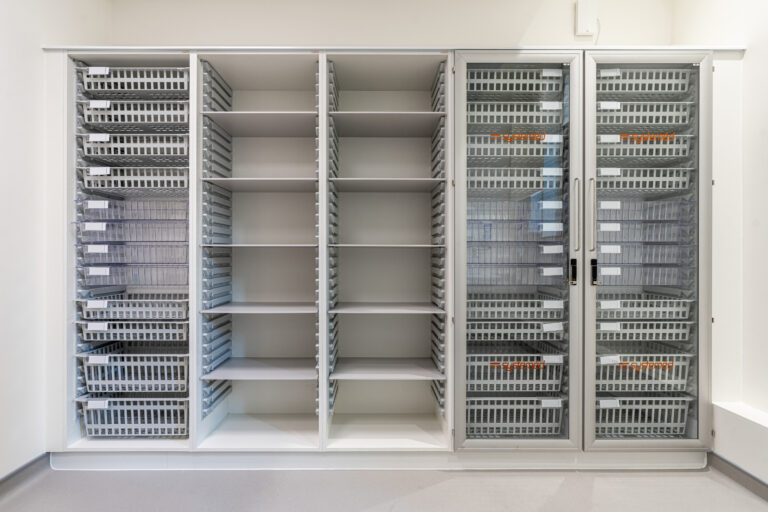
Modular clinical storage is built with change in mind. Units can be reconfigured, extended, or rearranged as requirements shift — all without the need for a full refit. Whether you need mobile storage, additional shelving, or re-organised internal compartments, a modular system offers long-term adaptability.
This ability to evolve ensures your storage remains functional, compliant, and efficient for many years.
Engineered to Maximise Every Millimetre
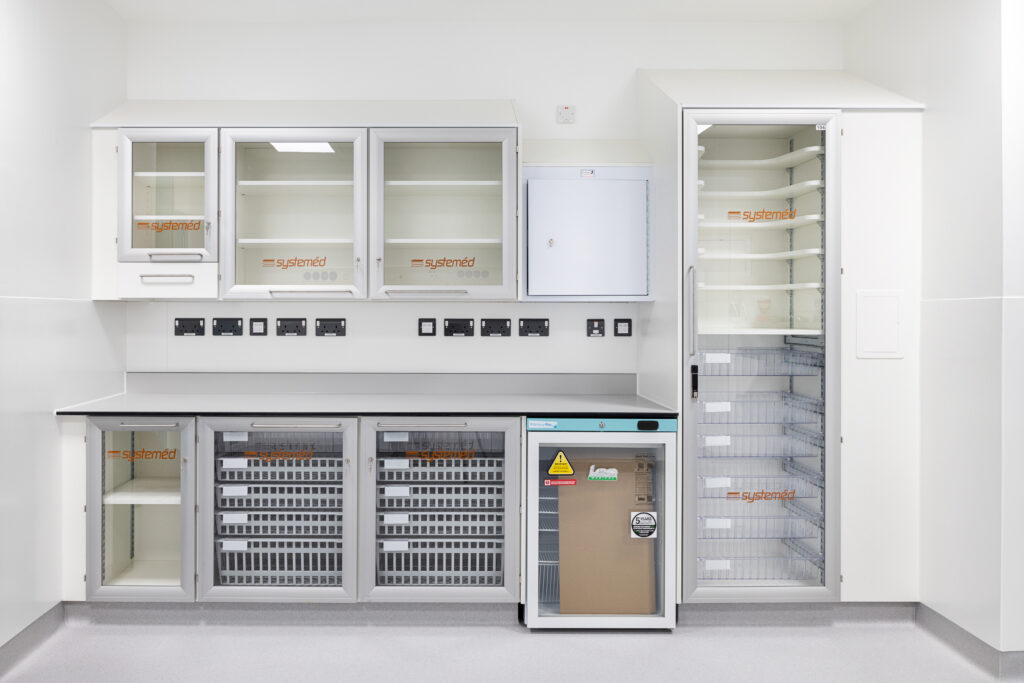
Standard domestic furniture often wastes valuable space — leaving awkward gaps, underused corners, or poorly sized shelves. In clinical areas, where every millimetre matters, that’s a problem.
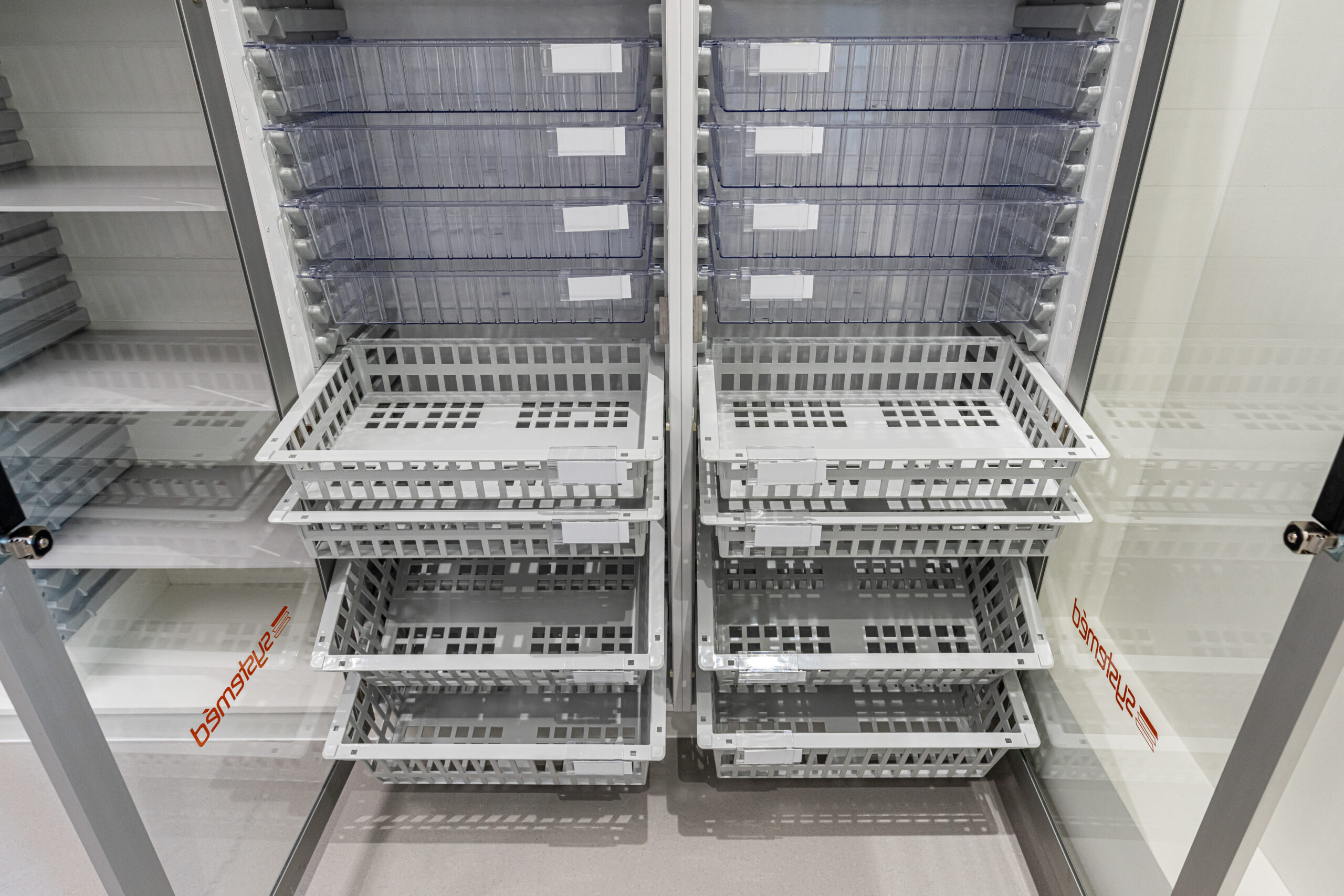
Specialist modular storage is designed around your room’s precise dimensions: height, depth, width, and workflow patterns. Internal layouts use baskets, trays, and specialist components that mirror clinical inventory, improving stock visibility, simplifying restocking, and reducing clutter.
The result? Smarter organisation, better space utilisation, and a more efficient working environment — even in the smallest rooms.
Purpose-Built for Hygiene and Infection Control
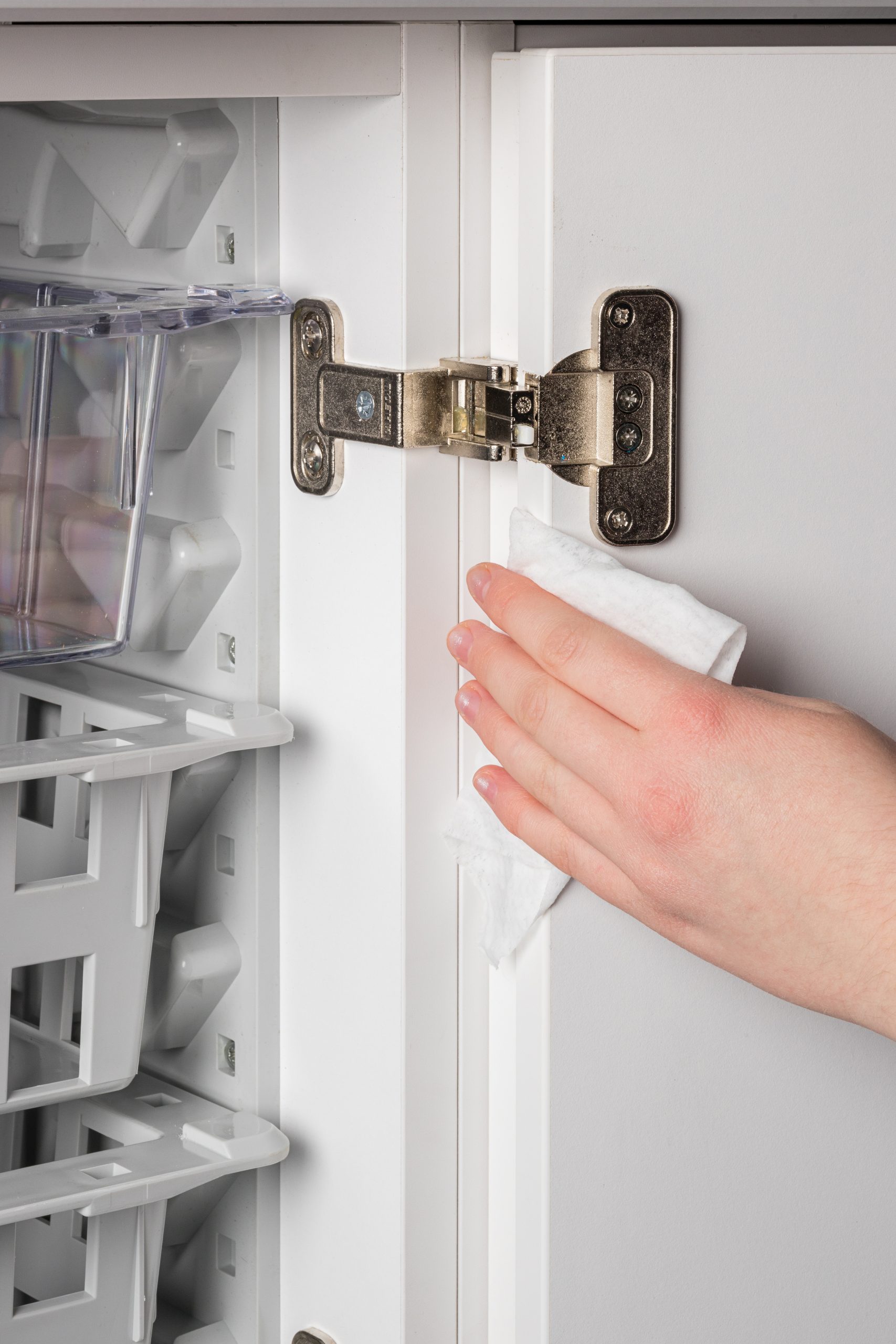
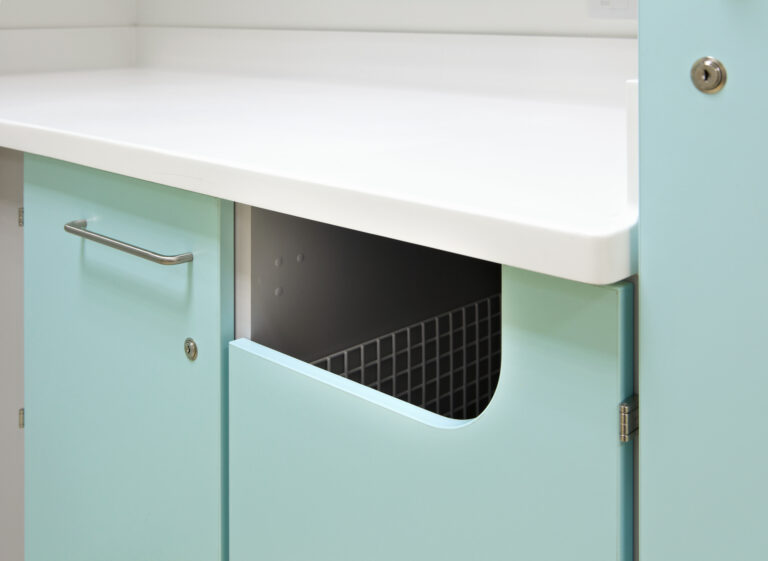
In healthcare, hygiene is non-negotiable. Clinical-grade furniture is manufactured to meet rigorous standards, with smooth surfaces, seamless joints, and integrated upstands that eliminate dirt traps. Exposed knuckle hinges allow full access to all carcase and door edges for complete cleaning when open.
These design features don’t just look hygienic — they make effective, thorough cleaning achievable, supporting infection prevention protocols and helping maintain a safe clinical environment long-term.
Priorities First
Budgets always matter — but in clinical environments, value is derived from more than price alone. Durability, hygiene, space efficiency, workflow optimisation, and long-term adaptability define true value.
While purpose-built clinical furniture may carry a higher upfront cost than domestic alternatives, it delivers a far greater return through safer care, smoother daily operations, extended lifespan, and the ability to evolve over time.
When those priorities come first, the budget naturally follows.