
Across the UK, demand for faster, safer and more resilient medication dispensing has never been stronger. As pharmacies look to the efficiencies automation can bring to the pharmacy, workforce pressures, growing patient throughput and the shift toward a more clinically led service mean that traditional manual workflows are being stretched to their limits.
This is why many hospital and community pharmacies are turning to robotic dispensing. Robots promise accuracy, efficiency and a more controlled environment for medicines—but they are only as effective as the systems that support them.
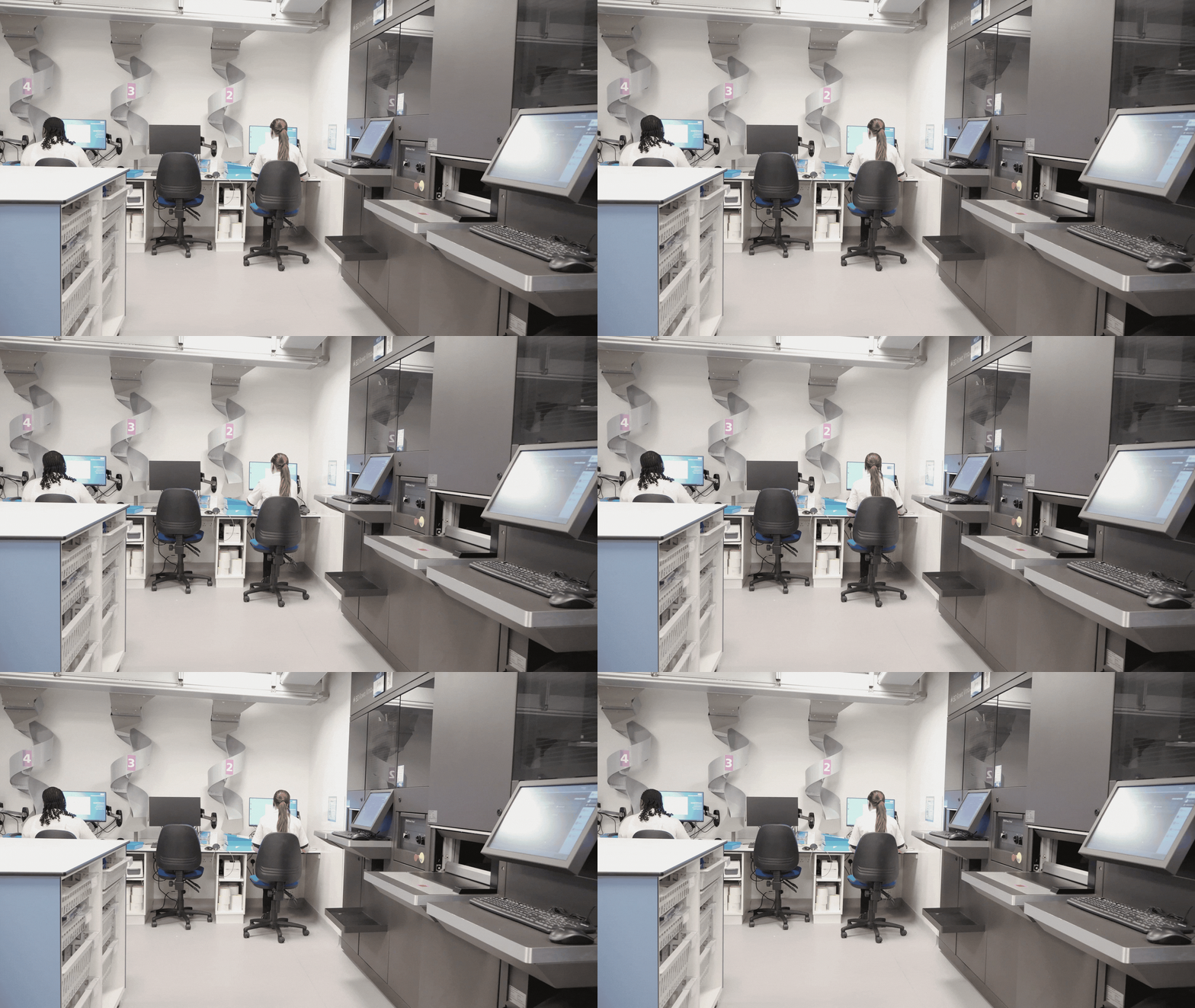
Why Robots Matter in Today’s Pharmacy
Robots reduce human touchpoints in the dispensing process, helping prevent common errors such as mis-picks, look-alike/sound-alike confusion, and stock misplacement. With barcode verification and controlled stock movement, automation introduces an additional layer of safety in busy dispensaries.
Releasing Staff Time and Increasing Capacity
By absorbing repetitive tasks – picking, sorting, replenishing – robots allow pharmacists to focus on what matters most, for example, clinical checks, medicines optimisation and ward-based work. Automation doesn’t replace people, it enables them.
Optimising Spaces and Handling Stock
Robotic installations often force a rethink of how stock is stored and accessed. Good storage design ensures:
- Correct segregation of medicines
- Efficient flow from goods-in to robot to checking booths
- Effective cold-chain integration
- Safe Controlled Drug management
A robot cannot compensate for poor layout – but paired with well-designed storage, it transforms efficiency.

The Challenges: What Pharmacy Robotics Can’t Fix Alone
Robots can create new risks if workflows aren’t right. Automation can introduce issues such as, downtime bottlenecks, incorrect loading packs and confidence on technology. A clear workflow, disciplined stock presentation and strong SOPs must sit around the robot for it to operate safely.
Robots Need the Right Environment
They rely on standardised storage, uncluttered pathways, logically arranged benches and well-controlled replacement routines to operate safely and effectively.
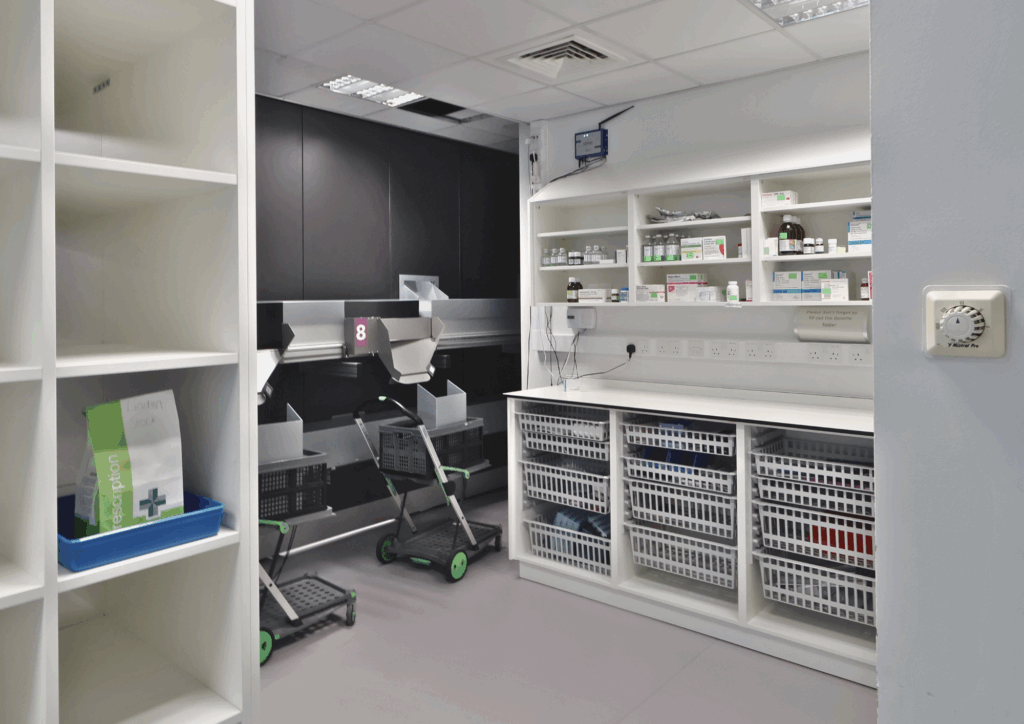

🌟Case Study: Darent Valley Hospital – Pharmacy Dispensary
The Darent Valley Hospital pharmacy is one of the UK’s most recognised examples of effective automation, following the installation of two dispensing robots affectionately named Tom and Jerry.
Introduced to improve accuracy, reduce turnaround times, create a safer and more efficient dispensary, and future-proof the service for growing demand, the twin robots quickly delivered measurable benefits.

The hospital saw a significant reduction in picking errors, stronger stock control and expiry management, greater resilience during peak periods, and more clinical time made available for ward-based care.
The success at Darent Valley Hospital wasn’t due to the robots alone; it was the result of a thoughtfully redesigned dispensary, with improved storage layouts, clearer zoning and optimised medicines flow.
Automation Works Best on Solid Foundations
Robotic dispensing systems deliver significant benefits, but only when they are introduced into an environment designed to support them. Successful automation depends on optimised layouts, disciplined stock management and a clear, safe workflow that makes full use of the robot’s capabilities.
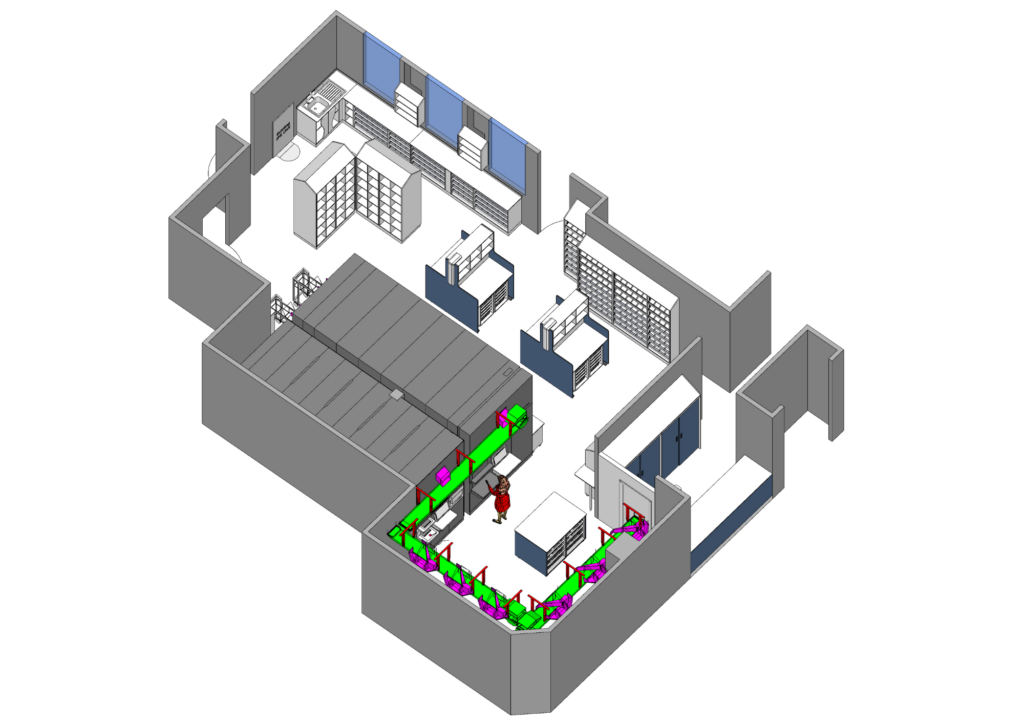
Creating the Right Conditions for Robotic Success
Key elements that underpin effective pharmacy automation include:
- Designing dispensaries around safe, efficient medicines flow
- Using modular, future-proof storage that complements robotic systems
- Integrating cold-chain and Controlled Drugs into well-planned floor layouts
- Ensuring stock presentation, labelling and segregation support accuracy
- Selecting robust cabinetry and shelving that withstand high daily use
Whether a pharmacy installs a robot now or simply aims to prepare for future automation, the same principles apply robust storage, clear pathways, controlled access and a working environment built around the needs of staff and patients.

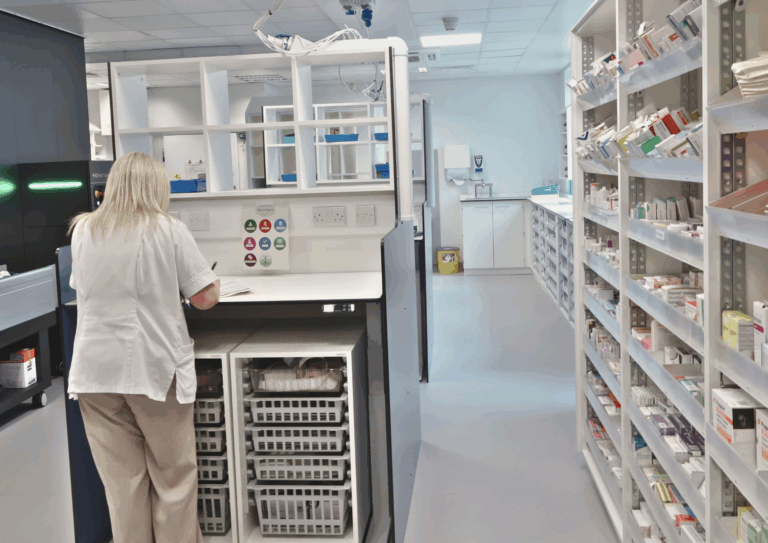
When the foundations are strong, robots become a transformative asset rather than just a new piece of equipment.